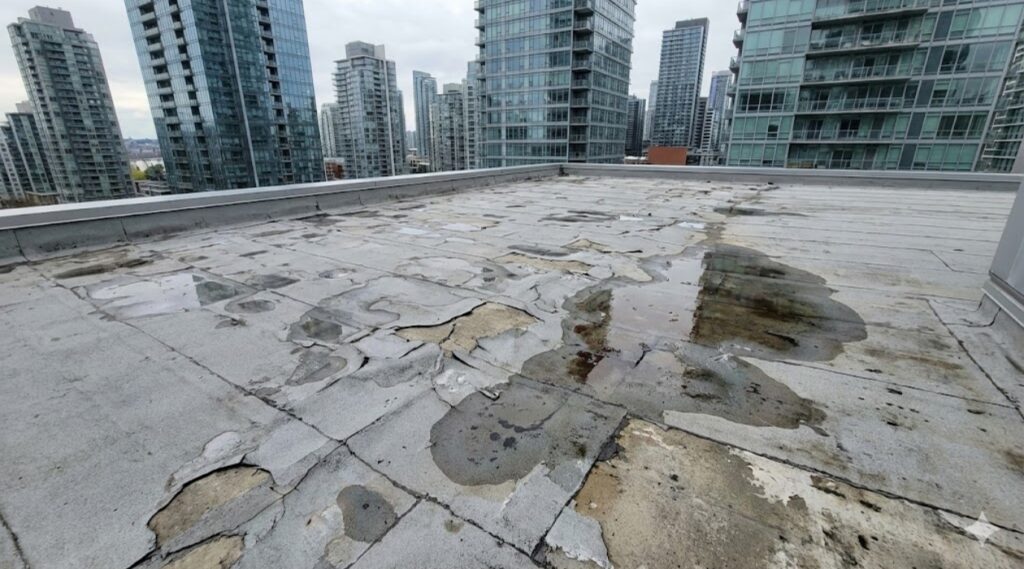
Membrane failure is one of the leading causes of water ingress, structural deterioration, and costly repairs in high-rise and strata buildings across New South Wales. When waterproofing membranes break down—on balconies, rooftops, planter boxes, podiums, or wet areas—moisture penetrates the building envelope, leading to leaks, reinforcement corrosion, concrete cancer, and progressive façade damage.
CPR specialises in diagnosing and repairing membrane failures using AIMMS™ data-driven inspections and Scaffold-Free™ access systems, ensuring accurate identification of the root cause and engineered long-term waterproofing solutions

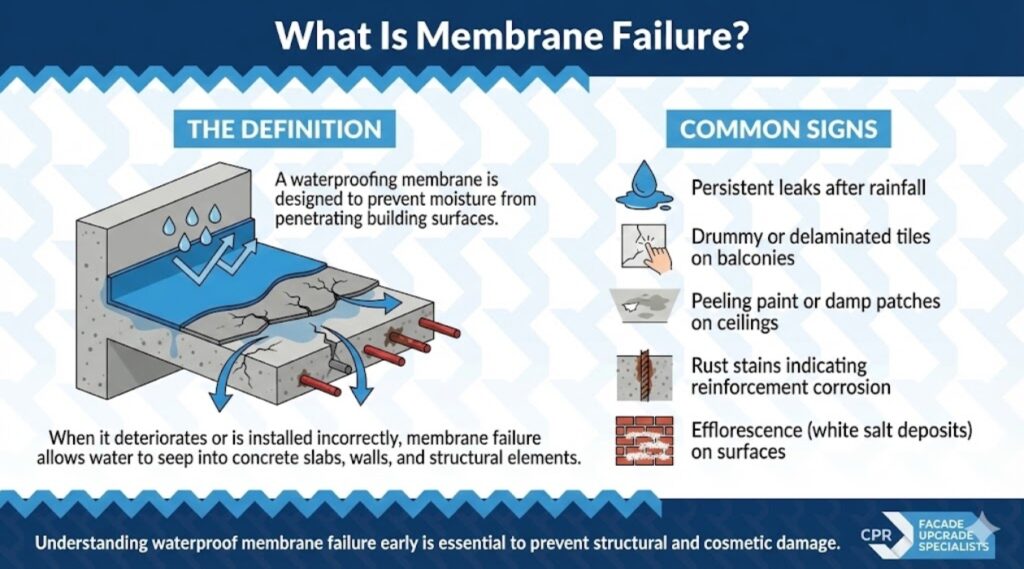
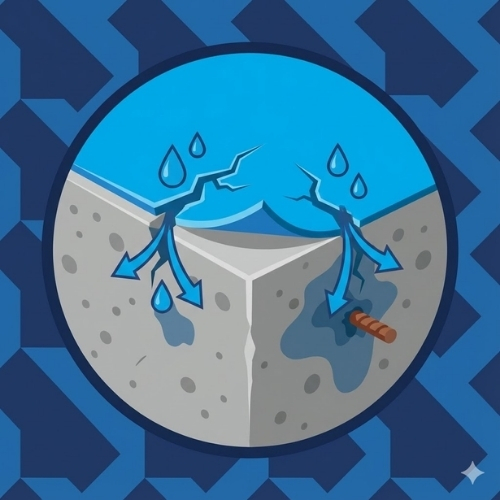
A waterproofing membrane is designed to prevent moisture from penetrating building surfaces. When it deteriorates or is installed incorrectly, membrane failure allows water to seep into concrete slabs, walls, and structural elements.
Common signs include:
Understanding waterproof membrane failure early is essential to prevent structural and cosmetic damage.
Membranes fail for several reasons—often due to age, environmental conditions, or installation errors.
Typical causes include:
These are common contributors to failures with water-based waterproof membranes, particularly in older strata buildings.
Misdiagnosing membrane failure is common—many repairs only treat the symptoms, not the root cause. CPR uses AIMMS™, our advanced mapping and diagnostic process, to pinpoint exactly where and why the membrane has failed.
Our inspection may include:
This allows us to provide precise, cost-efficient repair scopes with full transparency.
Membrane failure will only worsen over time. Early detection prevents structural damage, water ingress, and costly internal repairs.
Explore our complete building remediation and preservation services or learn about our long-term concrete repair and durability solutions.