Expansion Joint Failure in High-Rise and Strata Buildings

Expansion Joint Failure in High-Rise and Strata Buildings

Expansion joint failure is a critical but frequently overlooked facade issue in high-rise and strata buildings. Expansion joints are designed to accommodate movement caused by temperature changes, structural loading, wind forces, and building settlement. When these joints fail, movement is no longer controlled — placing stress on adjacent facade elements.

In tall buildings, failed expansion joints can quickly lead to cracking, water ingress, facade delamination, and accelerated structural deterioration if not correctly identified and addressed.

CPR specialises in diagnosing and resolving expansion joint failure in difficult-access, high-rise buildings using AIMMS™ — our data-driven inspection and analysis system — combined with Scaffold-Free™ access technologies to deliver accurate, long-term remediation with minimal disruption.

What Is Expansion
Joint Failure?

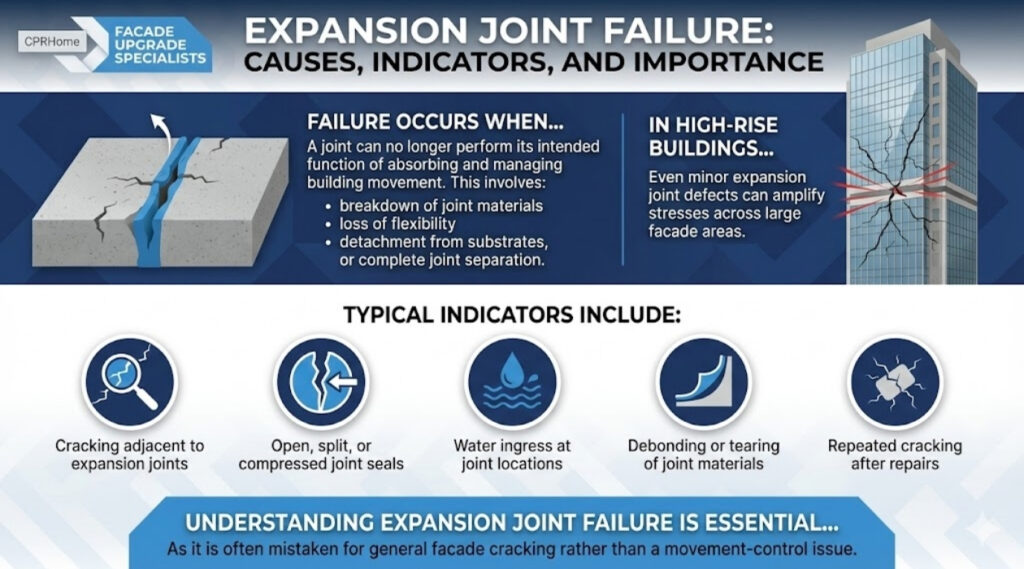
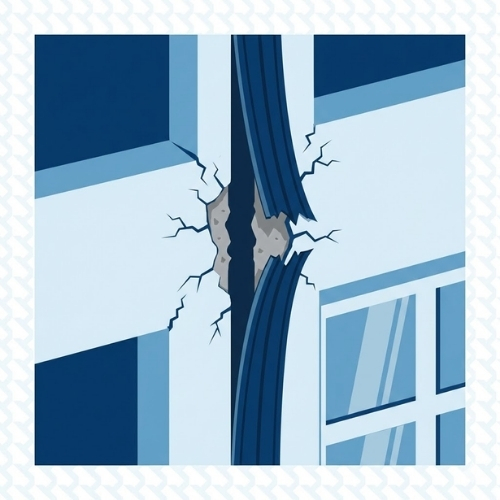
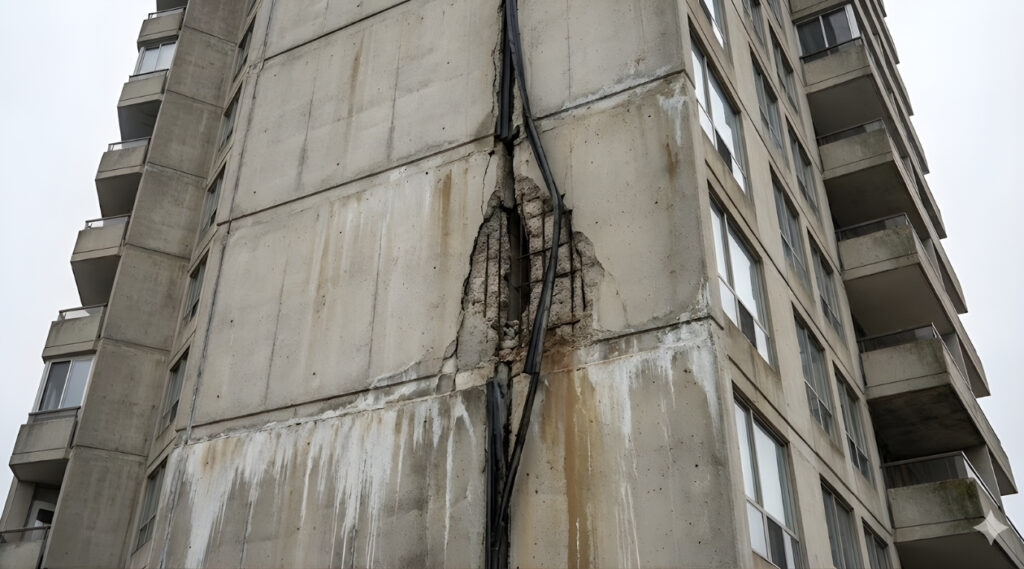
Expansion joint failure occurs when a joint can no longer perform its intended function of absorbing and managing building movement. This may involve breakdown of joint materials, loss of flexibility, detachment from substrates, or complete joint separation.

In high-rise buildings, even minor expansion joint defects can amplify stresses across large facade areas.

Typical indicators include:

  • Cracking adjacent to expansion joints
  • Open, split, or compressed joint seals
  • Water ingress at joint locations
  • Debonding or tearing of joint materials
  • Repeated cracking after repairs

Understanding expansion joint failure is essential, as it is often mistaken for general facade cracking rather than a movement-control issue.

Expansion Joint Failure in High-Rise Walls and Facades

In high-rise and strata buildings, expansion joint failure commonly affects:

  • Vertical facade expansion joints
  • Slab-to-slab movement joints
  • Concrete expansion joint interfaces
  • Precast and rendered facade systems

When joints fail, uncontrolled movement transfers stress into walls, coatings, and finishes, increasing the risk of widespread facade damage.

Common Causes of Expansion Joint Failure

Expansion joint failure in high-rise buildings typically results from a combination of age, exposure, and movement demands beyond original design limits.

Common causes include:

  • Degraded or hardened joint sealants
  • Incorrect joint design or sizing
  • Poor installation or detailing
  • UV exposure and weathering
  • Building movement exceeding joint capacity

In some cases, bellows expansion joint failure may occur where flexible systems lose integrity or detach due to repeated cyclical movement.

Protect Your Building from
Movement-Related Facade Damage

Expansion joint failure rarely occurs in isolation. Left unresolved, it can trigger cascading facade defects, increased water ingress risk, and ongoing maintenance issues.

Early assessment and targeted remediation are essential to protect facade integrity, compliance, and long-term asset value.