How to repair chipping concrete is one of the most common — and misunderstood — questions strata committees, building managers, and consultants face when maintaining ageing buildings.
In high‑rise and difficult‑to‑access structures, chipping, flaking, or spalling concrete is never just a cosmetic issue. It is often an early warning sign of deeper deterioration within the building envelope. Left untreated, what looks like a small defect can escalate into structural risk, safety hazards, and significant cost blowouts.
At CPR Facade Upgrade Specialists, we see this concern daily. Committees worry about unexpected levies, managers fear disruption and resident complaints, and consultants want technical certainty. This guide explains how to repair chipping concrete properly — not as a short‑term patch, but as a multi‑decade solution.
What causes concrete to chip, flake, or spall?
Before discussing how to fix chipped concrete, it is critical to understand why it happens — especially in exposed facades, balconies, slabs, and podiums.
Moisture ingress and corrosion
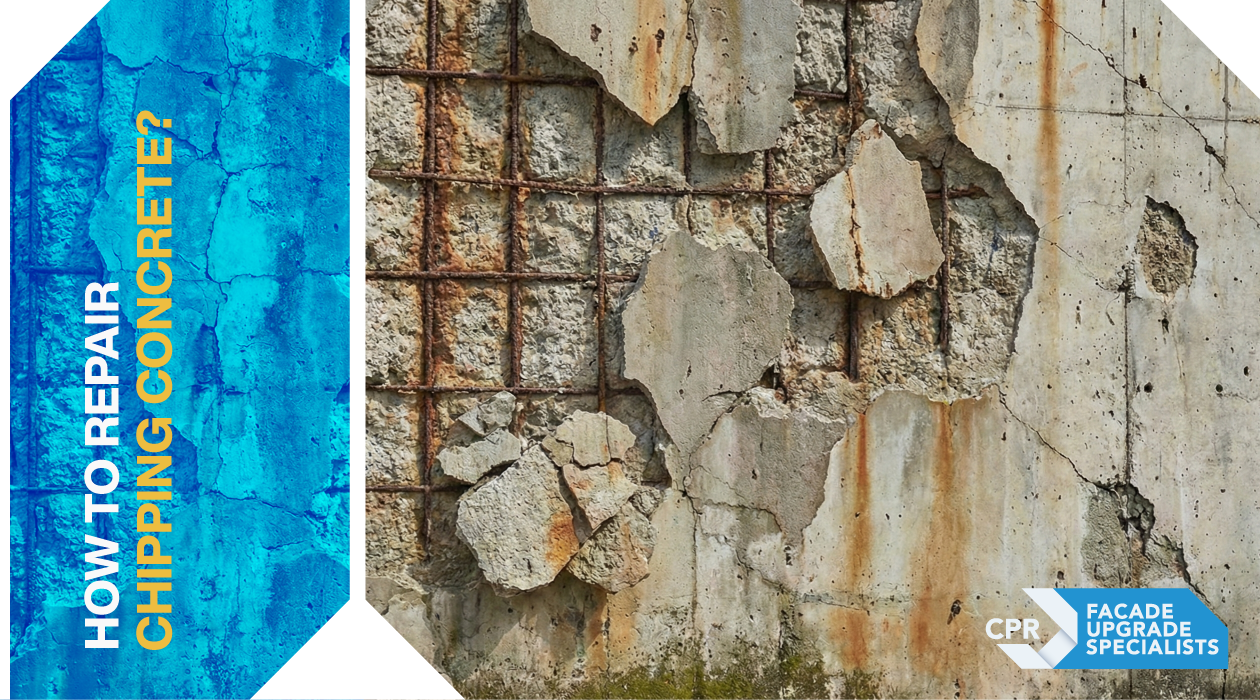
Water penetration is the primary driver of concrete surface repair failures. When moisture reaches reinforcing steel, corrosion begins. As steel expands, it creates internal pressure, leading to cracking, flaking concrete, and eventually spalling.
Which means for you… what looks like a surface chip is often a symptom of hidden steel corrosion behind the concrete face.
Carbonation and ageing materials
Over time, carbon dioxide reduces the alkalinity of concrete, allowing steel reinforcement to corrode more easily. Older strata buildings are particularly vulnerable.
Poor original workmanship
Inconsistent cover to reinforcement, low‑quality mixes, or inadequate curing can accelerate deterioration. These defects often emerge decades later.
Environmental exposure
Coastal environments, pollution, and temperature movement increase stress on concrete surfaces, especially on high‑rise facades.
Why chipping concrete should never be ignored
Many owners assume concrete crack and chip repair can wait. Unfortunately, delay is one of the most expensive decisions a strata committee can make.
• Falling debris becomes a safety risk • Water ingress accelerates internal damage • Repairs expand from localised patches to full‑scale remediation • Asset value declines
Which means for you… early intervention almost always delivers cost savings compared to reactive repairs.
DIY concrete repair vs professional remediation
Search results often promote DIY concrete repair. While this may be suitable for small, ground‑level domestic applications, it is rarely appropriate for strata or commercial buildings.
Limitations of DIY concrete repair
• No access to reinforcement assessment • Incompatible concrete patching compound • No long‑term corrosion protection • Unsafe access methods at height
Which means for you… DIY fixes often fail within 12–24 months, creating repeat costs and greater damage.
How to repair chipping concrete correctly (the professional process)
True concrete surface repair follows a methodical, evidence‑based process — particularly in high‑rise environments.
Step 1: Accurate diagnosis with AIMMS™
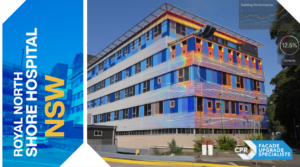
CPR begins with a data‑driven inspection using AIMMS™ — our proprietary Asset Integrity & Maintenance Management System.
AIMMS™ maps every defect across the building envelope, quantifying severity, location, and repair scope.
Which means for you… no guesswork, no inflated scopes, and full transparency before work begins.
Step 2: Safe Scaffold‑Free™ access
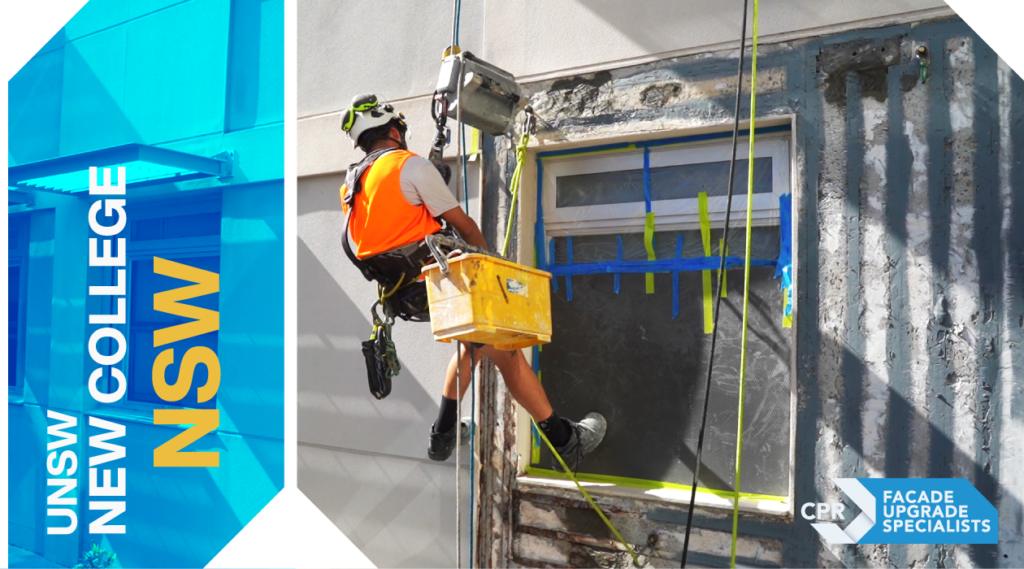
Using Scaffold‑Free™ access systems such as MARS™, PEARS®, and SkyPod®, our teams reach difficult‑to‑access areas without scaffolding.
Which means for you… up to 30% cost savings, minimal disruption, and no loss of resident privacy.
Step 3: Removal of unsound concrete
All loose and delaminated material is carefully removed to expose sound substrate and reinforcement.
This step is critical for successful spalling concrete repair.
Step 4: Steel treatment and protection
Exposed reinforcement is cleaned, treated, and protected using corrosion‑inhibiting systems.
Which means for you… the repair addresses the root cause, not just the visible damage.
Step 5: Concrete patching compound selection
Not all patching products are equal. CPR specifies best concrete repair products matched to the building’s exposure, movement, and lifespan requirements.
Which means for you… repairs integrate seamlessly with existing concrete and perform long‑term.
Step 6: Reprofiling and resurfacing
Repairs are rebuilt to original profiles, including edges, corners, and architectural details.
This includes how to fix broken concrete edges and resurface damaged concrete.
Step 7: Protective coatings and finishes
Where required, breathable protective coatings are applied to reduce future moisture ingress.
Which means for you… extended durability and reduced future maintenance.
Common repair scenarios in strata buildings
Repair flaking concrete on balconies
Balconies are high‑risk zones due to exposure and drainage issues. Localised repairs must integrate waterproofing strategies.
Concrete floor repair in car parks
Vehicle loads, moisture, and poor ventilation accelerate deterioration. CPR designs repairs to withstand ongoing use.
Repair concrete driveway chips
Driveways require high‑strength patching compounds and traffic‑rated finishes.
Patching concrete holes on facades
Facade penetrations and fixings often create weak points that need specialist remediation.
Why traditional methods often fail
Many remediation failures stem from:
• Inadequate diagnosis • Lowest‑price tendering • Scaffolding‑driven methodologies • Lack of quality assurance
Which means for you… paying less upfront can lead to higher long‑term costs.
The CPR difference: multi‑decade concrete repair
CPR is not a trade contractor — we are building envelope specialists.
Proven results
• Award‑winning projects • Hundreds of high‑rise remediations completed • Documented before‑and‑after records via AIMMS™ • Video testimonials from strata committees
Quality assurance
All works are delivered by Accredited Service Partners™, ensuring consistency, safety, and accountability.
AssetCare™ after remediation
Our AssetCare™ programs provide ongoing monitoring and preservation treatments.
Which means for you… peace of mind long after the repair is complete.
When should you act?
If you notice:
• Chipping or flaking concrete • Rust staining • Cracking around edges • Falling debris complaints
It is time to seek professional assessment.
Book a concrete repair consultation
If you are responsible for a strata, commercial, or government building, the smartest next step is clarity.