Concrete Cancer

Concrete Cancer in High-Rise Buildings

Concrete cancer is one of the most common and costly issues affecting ageing high-rise buildings across New South Wales. From strata apartment blocks to commercial towers, once concrete begins to crack, spall, or expose reinforcing steel, the problem spreads quickly. The earlier it is identified and repaired, the lower the long-term impact on safety, appearance, and asset value.

At CPR, we specialise in diagnosing, repairing, and preventing concrete cancer, offering complete solutions through our facade remediation and preservation services across difficult‑access buildings using Scaffold-Free™ technology. Our approach combines rope-based access with advanced inspection processes to accurately map deterioration and deliver long-term remediation solutions.

What Causes Concrete
Cancer

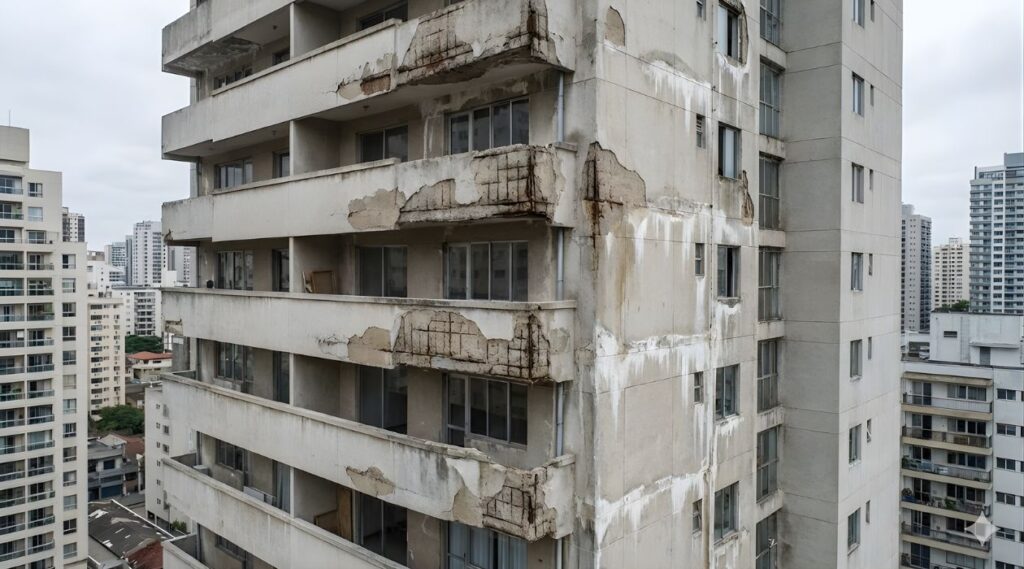
Concrete cancer begins when steel reinforcement within the concrete is exposed to moisture, salty air, carbonation, or poor waterproofing. As the steel corrodes, it expands and creates pressure within the concrete, eventually causing:

  • Visible cracking and delamination
  • Rust stains running down walls or balconies
  • Concrete spalling or breaking away
  • Structural weakening over time

Understanding the concrete cancer cause is essential for any strata or building manager trying to protect their property. In coastal areas and older structures—especially high-rise buildings—this deterioration accelerates considerably.

Why High-Rise Buildings Are Vulnerable

Concrete cancer begins when steel reinforcement within the concrete is exposed to moisture, salty air, carbonation, or poor waterproofing. As the steel corrodes, it expands and creates pressure within the concrete, eventually causing:

  • Visible cracking and delamination
  • Rust stains running down walls or balconies
  • Concrete spalling or breaking away
  • Structural weakening over time


Understanding the concrete cancer cause is essential for any strata or building manager trying to protect their property. In coastal areas and older structures—especially high-rise buildings—this deterioration accelerates considerably.

Concrete Cancer Repair: How It Works

Repairing concrete cancer requires isolating the cause and restoring structural integrity—not just patching the visible damage. Learn more about long-term strengthening through our concrete repair durability methods. CPR completes full remediation through:

  • Removing all loose or spalled concrete
  • Exposing and treating corroded steel reinforcement
  • Installing structural repair mortars
  • Rebuilding and sealing the affected areas
  • Applying protective coatings and waterproofing

This delivers long-term strength and prevents the issue from returning.

For owners seeking fixing concrete cancer solutions or understanding concrete cancer repair costs, our transparent diagnostic process ensures accurate pricing without hidden surprises.

Understanding
Concrete Cancer Repair Cost

Costs will depend on:

  • Severity of steel corrosion
  • Quantity of spalled areas
  • Location and accessibility
  • Required protective treatments

CPR provides the most accurate concrete cancer repair cost estimates because our inspections measure and document every defect individually.
