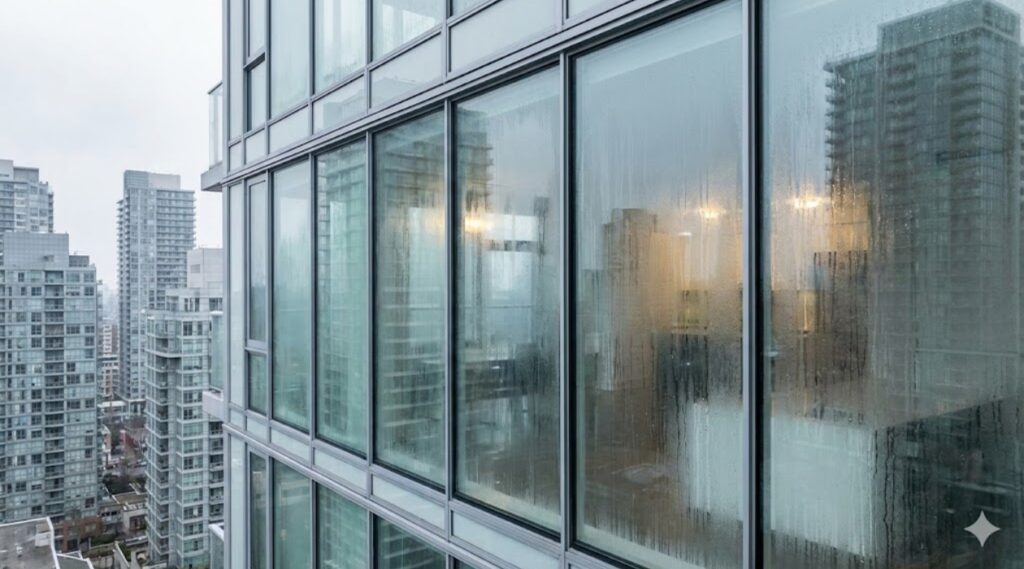
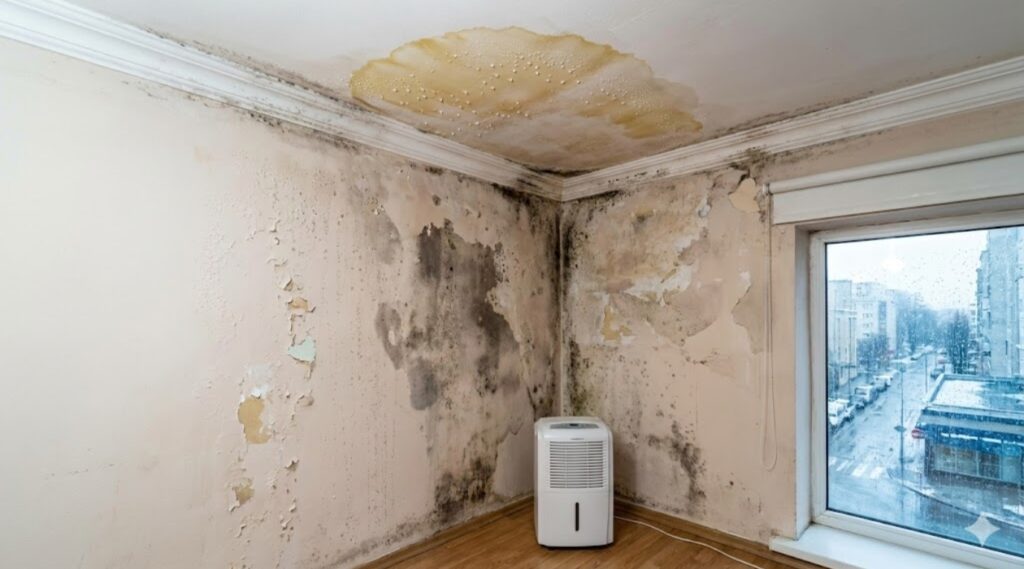
Condensation is a widespread but often misunderstood moisture issue affecting high‑rise and strata buildings across New South Wales. Unlike leaks or rising damp, condensation forms when warm, moisture‑laden air meets cooler surfaces, causing water to condense on ceilings, walls, windows, and within building cavities. Over time, this leads to staining, mould growth, corrosion, and deterioration of finishes and structure.
CPR specialises in diagnosing and resolving condensation‑related moisture problems in difficult‑access buildings using AIMMS™—our data‑driven inspection and analysis system—combined with Scaffold‑Free™ access technologies to deliver precise, long‑term solutions.

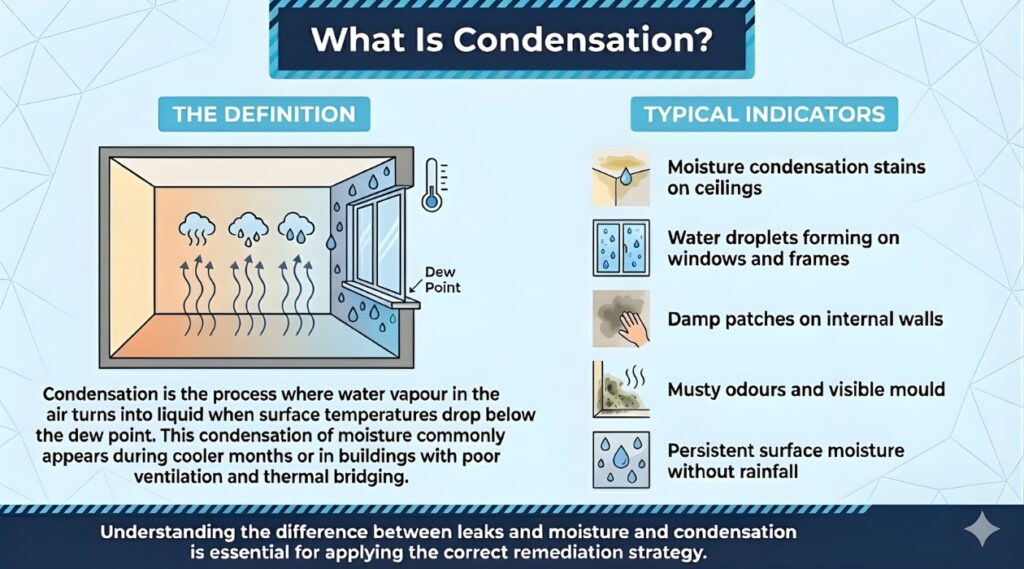
Condensation is the process where water vapour in the air turns into liquid when surface temperatures drop below the dew point. This condensation of moisture commonly appears during cooler months or in buildings with poor ventilation and thermal bridging.
Typical indicators include:
Understanding the difference between leaks and moisture and condensation is essential for applying the correct remediation strategy.
Condensation frequently develops inside wall cavities and ceiling voids where warm air becomes trapped. Over time, this can result in:
These issues are particularly common in apartments with limited airflow, sealed façades, or inadequate insulation.
Condensation is often misdiagnosed as water ingress, leading to ineffective repairs. CPR uses AIMMS™ to accurately identify moisture behaviour and temperature relationships.
Our assessment may include:
This allows us to determine the role of moisture condensation temperature and design targeted solutions that address the root cause.
Condensation problems rarely resolve on their own. Correct diagnosis and building‑wide solutions are essential to protect finishes, structure, and occupant health.
Explore our complete building remediation and preservation services or learn more about our long‑term concrete repair and durability solutions.