How long does a building inspection take? It’s one of the first questions strata committees, building managers, and consultants ask — and for good reason. Time directly affects disruption, cost certainty, and how quickly risks can be identified and controlled.
In reality, building inspection duration depends on far more than a simple site visit. Factors like building height, access constraints, facade complexity, and the inspection methodology itself all influence the outcome. When inspections are rushed or incomplete, hidden defects are missed — which often leads to cost blowouts later.
This guide explains exactly how long a building inspection takes, what affects inspection time, and how modern Scaffold-Free™ inspections powered by AIMMS™ deliver faster, more accurate, and far less disruptive results for high-rise and difficult-access buildings.
What is the average time for a building inspection?
The average time for a building inspection can range from a few hours to several days. There is no universal timeframe because no two buildings — or inspection methods — are the same.
As a general guide:
- Low-rise or simple commercial buildings: 2–6 hours
- Strata buildings (5–15 storeys): 1–2 days
- High-rise or multi-storey buildings: 2–5+ days
- Complex facade or structural inspections: staged over multiple visits
The key difference is not just building size inspection time, but how the inspection is performed. Visual-only inspections are faster — but they often miss critical issues. Data-driven inspections using AIMMS™ take slightly longer upfront, which means for you: clearer scope, fewer surprises, and far better long-term value.
How long does a commercial building inspection take?
How long does a commercial building inspection take? Typically, commercial building inspection time ranges from half a day to several days, depending on use, access, and risk profile.
Commercial buildings often involve:
- Larger facade areas
- Higher foot traffic and safety controls
- Compliance requirements
- Complex building services interfaces
A small commercial inspection may be completed in one day, while a multi-storey building inspection time can extend across multiple days if detailed facade and structural assessment is required.
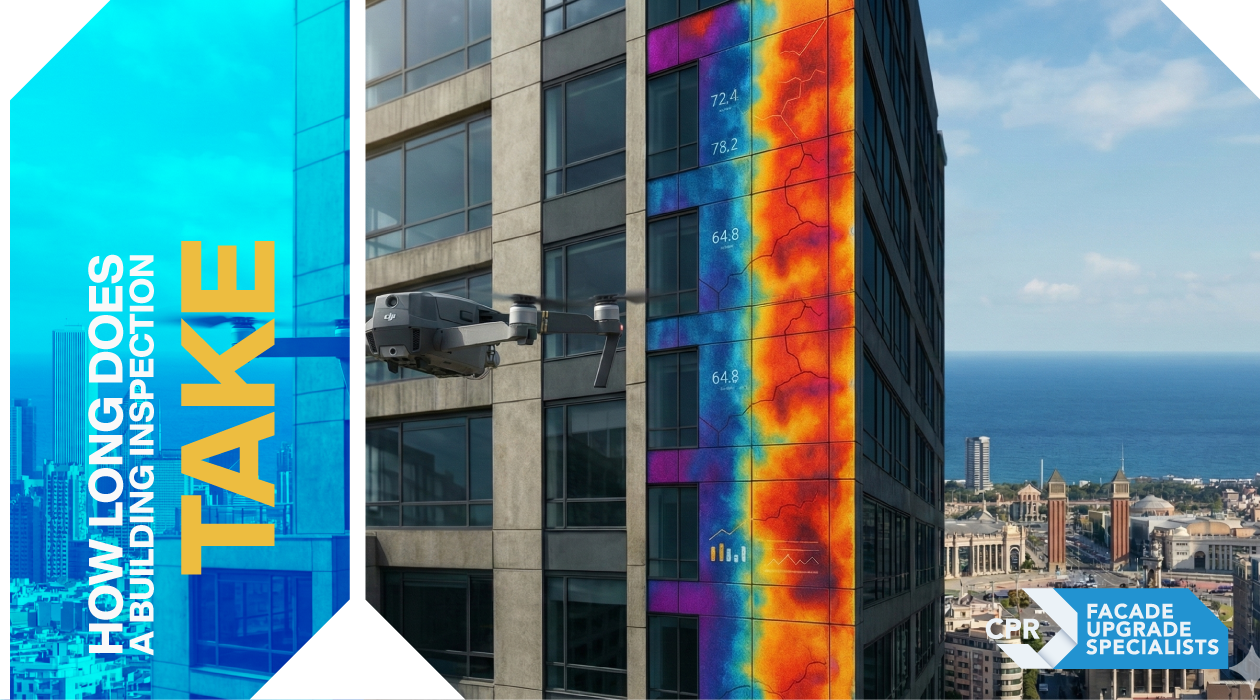
Using Scaffold-Free™ access systems supported by AIMMS™, inspections can proceed without closing footpaths, interrupting tenants, or installing costly scaffolding — which means for you: inspections continue while business operations remain unaffected.
Strata building inspection duration explained
Strata building inspection duration is one of the most misunderstood aspects of facade maintenance.
Many strata committees are told an inspection will be “quick,” only to discover later that the report was based on limited visual access. That approach may feel faster, but it often results in incomplete defect identification.
A proper strata inspection usually takes:
- Mid-rise strata (6–12 levels): 1–2 days
- High-rise strata (15+ levels): 2–4 days
With AIMMS™, inspections are conducted up close, drop by drop, capturing every defect photographically and quantitatively — which means for you: transparent reporting, defensible budgets, and confidence when presenting findings to owners.
Multi-storey building inspection time: what changes?
Multi-storey building inspection time increases exponentially with height — not just linearly.
Why?
- Wind exposure increases at height
- Facade materials vary by elevation
- Access becomes more complex
- Safety controls intensify
Traditional methods slow inspections significantly because access equipment must be erected, relocated, and dismantled repeatedly. Scaffold-Free™ access systems integrated into AIMMS™ eliminate this inefficiency — which means for you: faster inspection cycles without compromising detail or safety.
Factors affecting building inspection time
Several key factors affect building inspection duration. Understanding them helps set realistic expectations and avoids frustration later.
1. Building size and height
Building size inspection time is one of the biggest drivers. Larger facades, more elevations, and increased storeys all extend inspection time.
2. Access constraints
Difficult access buildings require specialised systems. Inspections without proper access often rely on guesswork — fast, but risky.
Scaffold-Free™ access combined with AIMMS™ allows inspectors to reach every elevation safely and efficiently — which means for you: no blind spots.
3. Number of defects
The number of defects impact inspection time directly. Buildings with advanced deterioration require detailed mapping, classification, and quantification.
4. Facade complexity
Facade inspection time for a building increases with:
- Multiple material types
- Architectural articulation
- Balconies, soffits, and protrusions
5. Inspection methodology
Visual-only inspections are quicker. Data-driven inspections using AIMMS™ take longer initially — which means for you: fewer variations, fewer disputes, and predictable project delivery.
Structural building inspection duration vs facade inspections
Structural building inspection duration differs from facade-only inspections.
- Facade inspections focus on external elements, waterproofing, coatings, and safety risks.
- Structural inspections assess load paths, movement, and material integrity.
When combined under AIMMS™, both inspections are integrated into a single, coherent dataset — which means for you: one source of truth instead of fragmented reports.
Why faster inspections aren’t always better
A fast inspection often feels reassuring. But speed without access and data leads to:
- Missed defects
- Inaccurate scopes
- Cost blowouts
- Disputes with contractors
AIMMS™ prioritises accuracy over speed — which means for you: inspections that protect budgets over decades, not just months.
How Scaffold-Free™ inspections reduce overall timelines
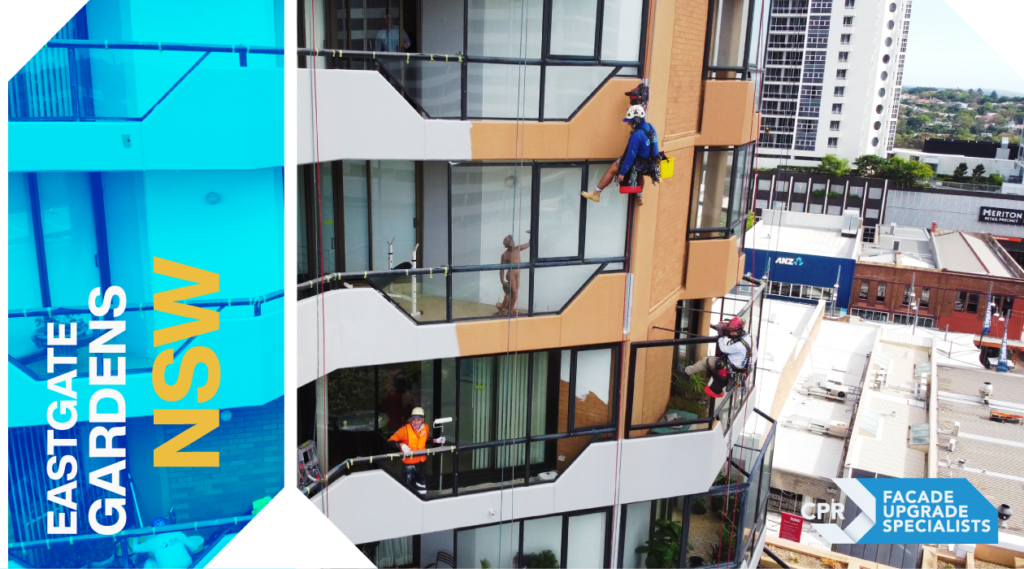
While detailed inspections may take slightly longer upfront, Scaffold-Free™ methodologies dramatically reduce total project timelines.
Because AIMMS™ delivers precise scopes early:
- Quotes are accurate
- Variations are minimised
- Projects start sooner
- Remediation finishes faster
Which means for you: less disruption, lower risk, and stronger long-term asset performance.
What happens after the inspection?
Inspection time doesn’t end on site. With AIMMS™, post-inspection deliverables include:
- Photographic defect mapping
- Quantified scopes
- Prioritised remediation pathways
- Long-term AssetCare™ planning
This transparency is why strata committees, building managers, and consultants trust CPR’s inspections — backed by award-winning projects, independent testimonials, and decades of proven results.
When should you book a building inspection?
You should book an inspection when:
- Water ingress appears
- Facade cracking or spalling is visible
- Compliance deadlines approach
- Budgets need defensible planning
Booking early prevents rushed inspections later — which means for you: control instead of crisis management.
Book a data-driven building inspection with confidence
If you’re asking how long does a building inspection take, the better question is: will the inspection protect your building long-term?
AIMMS™ inspections provide clarity, certainty, and cost savings — without scaffolding, disruption, or guesswork.
Book a building facade inspection consultation:
Request an AIMMS™ demo to see how data-driven inspections work in practice.