
How to choose the best waterproof coating for my building? It’s a question every strata committee eventually faces — usually after leaks, rising maintenance costs, or growing concern that the building envelope is ageing faster than it should. And the fear is real: hidden water ingress is one of the most expensive and disruptive issues a building can face.
In high‑rise and difficult‑access structures, choosing the best waterproof coating isn’t just about picking a product — it’s about choosing a long‑term strategy that protects your investment, keeps residents safe, and avoids financial surprises.
At CPR Facade Upgrade Specialists, we work closely with strata committees, building managers and consultants to simplify this decision. With our Scaffold‑Free™ systems (MARS™, PEARS®, SkyPod®) and our AIMMS™ inspection and transparency platform, we provide a precise, affordable and data‑driven waterproofing plan — ensuring your building remains dry, compliant and watertight for decades.
Why Choosing the Best Waterproof Coating Matters
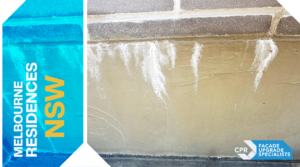
When leaks appear, they rarely stay small. A minor drip on level 10 can turn into major structural damage by level 3. Water travels, concrete breaks down, steel reinforcement corrodes, and remediation costs multiply.
Strata committees often fear three things:
- Cost blowouts when problems are bigger than expected
- Disruption to residents and businesses
- Distrust in contractors giving unclear scopes of work
Choosing the right waterproof coating — backed by data, a clear methodology, and transparent reporting — gives peace of mind, predictable costs, and long‑term safety.
This is where AIMMS™ makes the difference: our digital inspection, mapping and reporting system removes guesswork, quantifies every defect, and ensures an accurate waterproofing plan.
Understanding Waterproof Coating Types
Before choosing the best waterproof coating for your building, it’s important to understand the most common systems used across commercial, strata and government buildings.
1. Acrylic Waterproof Coatings
Acrylic coatings are UV‑resistant and flexible, suitable for façades exposed to sunlight.
- Best for: External walls, parapets, façades
- Benefits: Breathable, cost‑effective, easy to maintain
- Limitations: Not ideal for constantly wet areas
2. Polyurethane Coatings
A high‑performance option for roofs and podiums.
- Best for: Roofs, balconies, planter boxes
- Benefits: Durable, seamless, adaptable
- Limitations: Requires precise application and moisture‑free substrate
3. Cementitious Waterproofing
A popular choice for large concrete surfaces.
- Best for: Basements, retaining walls, lift pits
- Benefits: Rigid, strong, long‑lasting
- Limitations: Less flexible under structural movement
4. Bituminous Membranes
A traditional heavy‑duty coating.
- Best for: Roofs, retaining walls
- Benefits: Excellent barrier
- Limitations: Can become brittle over time, less sustainable
5. Elastomeric Coatings
Used frequently in façade preservation.
- Best for: Concrete façades, precast panels, Rendered surfaces
- Benefits: Elastic, crack‑bridging, long‑lasting
- Limitations: Requires professional application for best results
Each coating has specific strengths — but choosing the right one requires understanding your building’s condition, movement patterns, water entry pathways, and climate exposure.
This is precisely what AIMMS™ is designed to reveal.
How AIMMS™ Helps You Choose the Best Waterproof Coating
AIMMS™ (Advanced Inspection, Mapping & Management System) is CPR’s transparency framework that documents every defect with photographic evidence, grid‑based mapping, and precise quantities.
It turns your façade into a data‑driven blueprint, allowing strata committees and building managers to:
- See the exact locations of cracks, failed membranes, and water ingress points
- Receive a quantified scope of work (no more vague allowances)
- Understand the best waterproof coating for each building zone
- Predict accurate costs and avoid financial surprises
- Track before and after repairs for every patch, drop, and level
In short: AIMMS™ gives confidence, clarity, and control.
And because our Scaffold‑Free™ systems allow us to inspect and repair every millimetre of the façade without scaffolding, the overall work is more affordable, quieter, and far less disruptive.
Waterproof Coating Recommendations Based on Building Type
For Strata Buildings (Trusted Neighbour Tone)
When leaks start appearing inside units, committee members feel the pressure — from residents, insurance, and rising repair bills. Choosing the best waterproof coating means:
- Extending your building’s lifespan by decades
- Avoiding repeated patch‑up jobs
- Making a financially responsible decision
- Protecting your investment and reducing future levies
We help you choose coatings that are safe, proven, and designed for long‑term peace of mind.
For Building Managers (Confident Innovator Tone)
Your priority is performance, efficiency, and minimal disruption. Our coatings recommendations consider:
- Movement behaviour of concrete
- UV exposure and weather cycles
- Existing membrane failure patterns
- Compatibility with surrounding materials
With AIMMS™ reporting, you receive traceable documentation that supports compliance and reduces the risk of resident complaints.
For Consultants & Engineers
Our Scaffold‑Free™ access systems allow full‑façade diagnostics, delivering:
- Complete datasets for quantitative analysis
- Compatibility studies for coating systems
- Patch‑level detailing for accurate specification
- Verified QA systems through photographic evidence
AIMMS™ becomes a technical asset for you — a proof‑based system that supports better engineering decisions.
Key Factors When Choosing the Best Waterproof Coating for Your Building
1. Substrate Type
Concrete, render, precast, steel and masonry all require different systems.
2. Movement & Cracking Behaviour
Elastomeric coatings are ideal for buildings with structural movement.
3. Location Exposure
Roofs face UV and ponding; façades face rain and wind pressure.
4. Building Height & Access Limits
High‑rise buildings require systems applied safely from the outside — a specialty of CPR’s Scaffold‑Free™ Method.
5. Maintenance Lifecycle
We design coatings with multiple‑decade durability in mind, supported by AssetCare™ maintenance plans.
6. Budget & Cost Savings
Using MARS™, PEARS® and SkyPod® eliminates scaffolding — significantly reducing labour and project costs.
7. Application Method
AIMMS™ ensures the right method is chosen:
- Brush & roller
- Spray application
- Trowel‑on membrane
Each option influences longevity and final performance.
Common Waterproofing Problems We Diagnose Through AIMMS™
- Blistering coatings
- Cracked render allowing water ingress
- Failed sealant joints
- Concrete cancer triggered by chlorides and moisture
- Poorly installed membranes on roofs and balconies
- Rising damp in walls
- Ponding water on flat roofs
Each issue requires a specific treatment plan — often combining coatings, sealants, crack injection, joint reinstatement and protective systems.
Why CPR’s Scaffold‑Free™ Waterproofing Approach Is a Smarter Choice
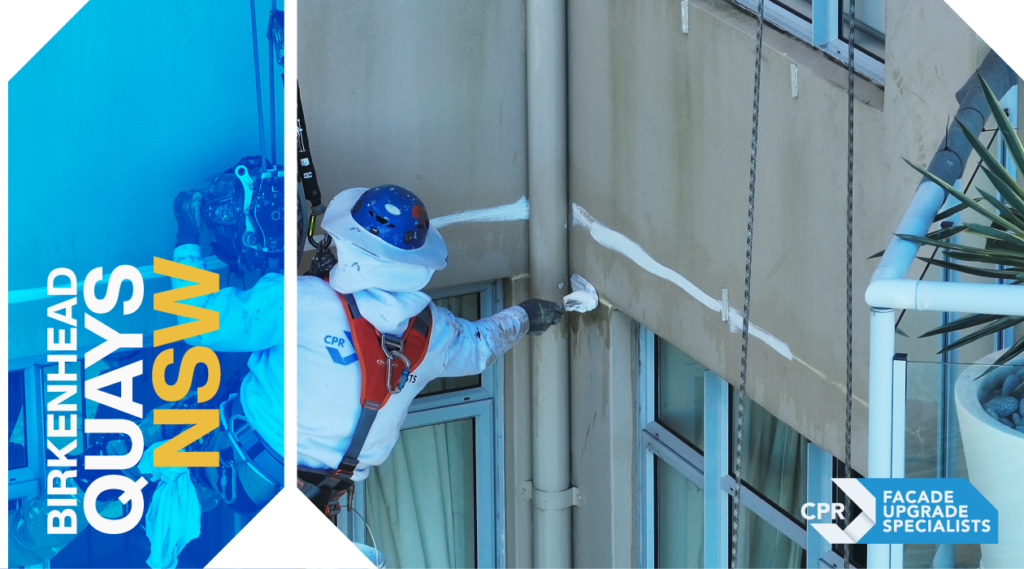
Traditional remediation via scaffolding is expensive, slow, and disruptive. CPR’s patented access systems make waterproofing safer, faster and more affordable.
MARS™
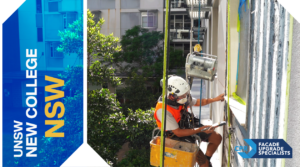
Our rope‑based movement system allows technicians to position themselves precisely where needed — which means for you faster inspections and repairs.
PEARS®
Our powered elevation system helps move materials vertically with ease — which means for you shorter project timelines and fewer interruptions.
SkyPod® Workstations
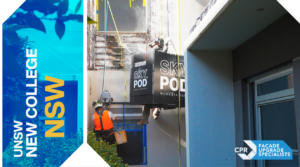
Fully encapsulated external workstations allow safe grinding, repair and coating — which means for you discreet upgrades without noise, dust or privacy loss.
AIMMS™
Our quality‑assurance and transparency framework documents everything — which means for you predictable outcomes, reduced risk, and full control.
Combined, these systems create significant cost savings and allow waterproofing works to be completed without scaffolding — perfect for strata buildings worried about budget.
The Waterproofing Process with CPR
Step 1 — AIMMS™ Inspection & Digital Mapping
We create a detailed map of every defect.
Step 2 — Coating System Selection
Based on:
- Location
- Substrate
- Crack behaviour
- Environmental exposure
- Long‑term maintenance
Step 3 — Scaffold‑Free™ Remediation
Using SkyPod® + MARS™ + PEARS®.
Step 4 — Coating Application
Performed by Accredited Service Partners™ trained to CPR standards.
Step 5 — Final QA & AssetCare™ Recommendations
We provide photographic evidence, patch‑by‑patch.
If your strata building is facing leaks, coating failures or rising maintenance bills, it’s time for a transparent, data‑driven solution.
🔹 Book a waterproofing consultation
🔹 Explore protective coating solutions
Or request an AIMMS™ demo to see exactly what’s happening behind your façade.