What Is the Best Waterproof Paint for High-Rise Buildings?
Choosing the best waterproof paint for high‑rise buildings isn’t just a technical decision—it’s a financial, safety, and long‑term performance decision. For strata committees worried about special levies, for building managers overwhelmed with resident complaints, and for consultants needing certainty rather than approximations, waterproofing is one of the most important protective measures in a building’s lifecycle.
In this guide, we explain—in CPR’s Trusted Neighbour and Confident Innovator voices—what makes a waterproof coating truly last on a high‑rise façade. We also show why Scaffold‑Free™ access and AIMMS™, our proprietary assessment and transparency system, create better outcomes, less disruption, and long‑term peace of mind.
What Is the Best Waterproof Paint for High‑Rise Buildings? (Full Guide)
Understanding the Role of Waterproof Paint in High‑Rise Buildings
Waterproof paint for tall buildings must withstand constant UV exposure, extreme wind pressure, moisture cycles, salt spray (especially in coastal NSW), and significant thermal movement. These forces break down ordinary exterior coatings quickly. That’s why choosing the best waterproof paint for high‑rise buildings is critical to preventing façade deterioration, water ingress, and costly concrete repairs years later.
For strata committees—who often feel anxious about hidden defects and future levies—the right waterproof paint is a long‑term investment. For building managers and consultants, the right system reduces risk, callbacks, and complicated remediation timelines.
CPR’s AIMMS™ inspections give you a data‑driven understanding of how water travels through your façade, which means for you a precise scope of works and a coating system that is matched to the building’s exact conditions.
What Makes a Waterproof Paint Suitable for High‑Rise Façades?
1. High Elasticity & Crack Bridging
A good waterproof coating must stretch and move with the building. Many concrete high‑rises experience façade movement, creating micro‑cracks. An elastic membrane prevents water entry even when small cracks occur.
2. UV Resistance & Colour Stability
Tall buildings receive uninterrupted sun exposure—especially western façades in NSW. Low‑grade coatings chalk, fade, and discolour within years.
3. Breathability
Moisture needs to escape the substrate. A breathable waterproof system lets vapour out while blocking liquid water from entering.
4. Waterproofing Strength
The coating must repel heavy rainfall and resist wind‑driven water common on high‑rise towers.
5. Durability Under Harsh Conditions
Paint used on skyscrapers must withstand:
- Salt spray (common in Sydney’s coastal buildings)
- Pollution and airborne contaminants
- Intense UV
- Expansion and contraction
- Strong winds
6. Substrate Compatibility
The best waterproof paint for high‑rise buildings must bond well to:
- Concrete
- Render
- Masonry
- Fibre‑cement
- Previously painted surfaces (if sound)
This is where AIMMS™ provides clarity—which means for you a clear diagnosis of the exact substrate condition, existing failures, and the waterproof system required.
Reviewing the Best Waterproof Coating Types for High‑Rise Buildings
Below is a technical review tailored for strata committees, building managers, and consultants.
1. Acrylic Elastomeric Coatings (Most Common for High‑Rise Façades)
Why they work:
- Highly elastic
- UV‑resistant
- Breathable
- Cost‑effective
- Ideal for concrete and rendered buildings
Used correctly, elastomeric coatings provide a long‑lasting waterproof exterior paint solution for tall buildings.
2. Polyurethane Waterproof Coatings (High Flexibility)
Benefits:
- Extreme flexibility
- Strong adhesion
- Excellent water resistance
Ideal for areas with high crack movement or rooftop parapets.
3. Siloxane & Silicone‑Enhanced Paints (Superior Water Repellency)
Why specifiers use them:
- Superior hydrophobic performance
- Excellent vapour permeability
- Strong UV resistance
These are often combined with acrylic membranes for complete systems.
4. Cementitious Waterproofing (Not a Stand‑Alone Paint)
Used on:
- Basement walls
- Planters
- Retaining walls
Not typically recommended as the primary façade coating for high‑rise exteriors.
So, What Is the Best Waterproof Paint for High‑Rise Buildings?
The most reliable solution is a high‑performance elastomeric acrylic coating system reinforced with primers, sealants, and membrane layers—specified according to a building’s AIMMS™ diagnostic data.
Why? Because high‑rise façades require:
- Flexibility
- UV longevity
- Breathability
- Crack resistance
- Strong adhesion
A single product is never the answer. A complete coating system tailored by CPR specialists—guided by AIMMS™ data—ensures the façade is protected for multiple decades.
Why AIMMS™ Is the Smartest Way to Choose Waterproof Paint
Traditional façade assessments rely on assumptions. AIMMS™ eliminates the guesswork.
With AIMMS™ you get:
- A sky‑level 360° façade mapping organised by drop, level, and repair zone.
- A digital record of every defect.
- Exact measurement of surface failures, cracking, blistering, and moisture pathways.
- Transparent photographic evidence before and after repairs.
Which means for you:
- Certainty about what your building actually needs.
- No inflated scopes.
- A waterproof paint system engineered for long‑term performance—not guesswork.
For strata committees, that means: peace of mind, affordability, and no hidden costs.
For building managers: fewer resident complaints, faster delivery, and quality assurance.
For consultants: precise data, transparent reporting, and defensible specifications.
Scaffold-Free™ Access Makes Waterproof Painting More Affordable
Most owners fear façade painting because of scaffolding costs—often 20–30% of the project.
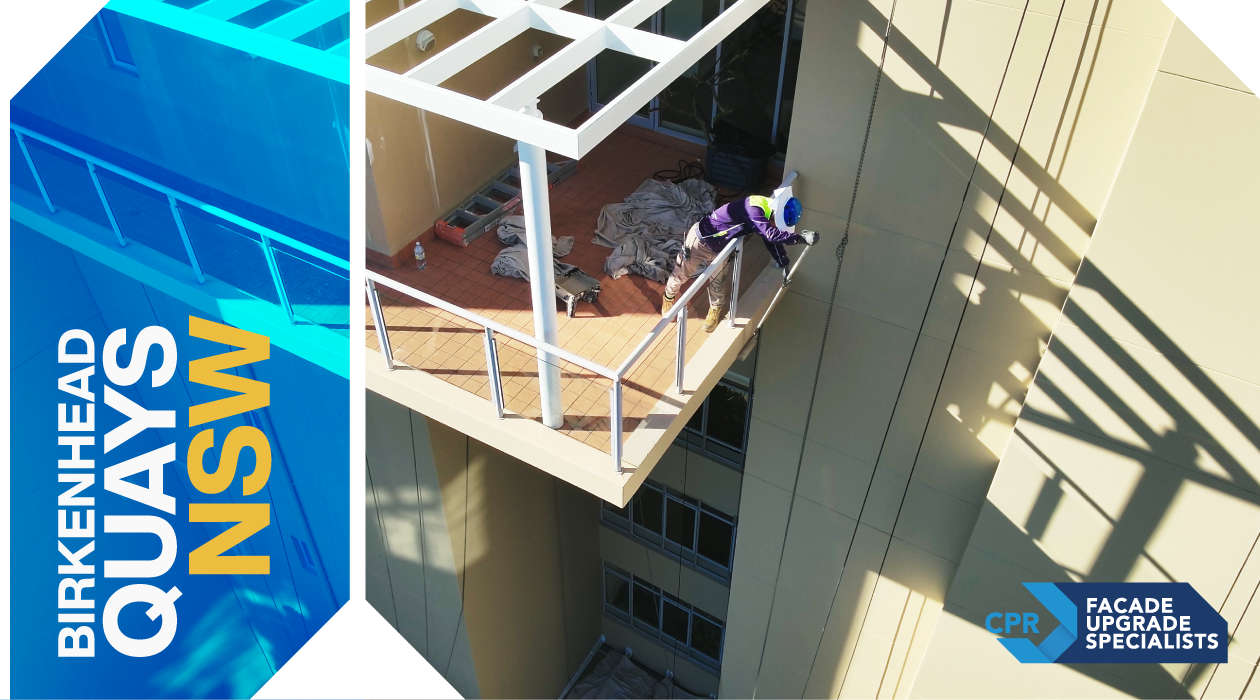
CPR’s Scaffold‑Free™ access, using MARS™, PEARS®, and SkyPod® workstations:
- Removes the need for expensive scaffolding
- Minimises noise and disruption
- Protects resident privacy
- Speeds up project timelines dramatically
Which means for you:
- Significant cost savings
- A faster project (e.g., 3 months instead of 6)
- A cleaner, quieter, safer experience for residents
How to Choose Waterproof Paint for Tall Buildings
A high‑rise waterproof coating should always be selected through a structured, data‑driven process. CPR follows a proven system:
Step 1: AIMMS™ Diagnostic Inspection
We map your entire façade to understand the exact cause of water ingress.
Step 2: Substrate & Moisture Analysis
We assess:
- Surface pH
- Moisture levels
- Crack depth
- Existing paint adhesion
Step 3: Tailored Waterproof Paint Specification
We specify:
- Primers
- Membranes
- Elastomeric coatings
- UV‑resistant finish coats
Step 4: Scaffold-Free™ Delivery
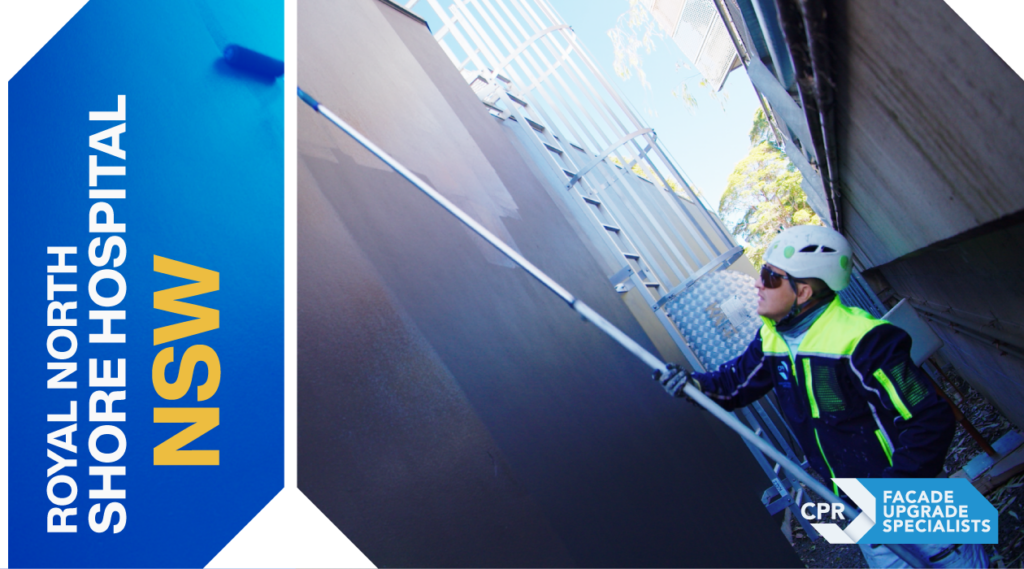
Using SkyPod® workstations for precise, safe, unobtrusive application.
Step 5: Quality Assurance via AIMMS™
Photographic, traceable evidence of every repair.
Step 6: AssetCare™ Long‑Term Preservation
Ongoing maintenance options ensure your façade stays protected for decades.
Common Waterproofing Issues in High‑Rise Buildings (And How the Right Coating Helps)
- Vertical cracking → Elastomeric systems bridge the cracks.
- Wind‑driven rain → Membranes act as a protective barrier.
- Salt attack → Silicone‑modified coatings resist chloride penetration.
- UV degradation → High‑grade acrylics resist chalking.
- Existing paint failure → AIMMS™ identifies the root cause before repainting.
Why Strata Committees Trust CPR for Waterproof Façade Painting
Strata committees want:
- Affordability without sacrificing quality
- Transparency
- No disruptions
- A provider they can trust
CPR delivers:
- Scaffold-Free™ cost savings
- AIMMS™ data transparency
- Award‑winning workmanship
- A quiet, unobtrusive process residents appreciate
Video testimonials consistently show owners expressing relief, confidence, and gratitude—because CPR removes the fear, confusion, and guesswork from façade remediation.
Start With a Data‑Driven Waterproof Coating Assessment
See how AIMMS™ can transform your building’s waterproofing strategy.
Book a consultation or request a demonstration